- September 28, 2026

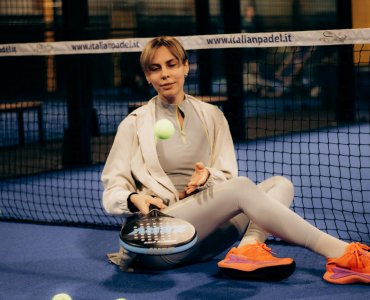
Padel is really taking off in Poland today. Just a few years ago, it was a niche curiosity, but today it is increasingly coming up in conversations among investors, sports club owners and people looking for a profitable business idea. No wonder. It is a dynamic sport, easy to learn and ideal for both recreational and competitive play. In practice, this means one thing: if you plan your project well, padel courts can become a solid source of income and a venue that attracts people all year round.
Padel has the advantage of appealing to a very wide audience. It is played by young people, working professionals, families, sports enthusiasts in their thirties, as well as those looking for a less strenuous activity than tennis. It is a social sport, easy to get into and exceptionally ‘addictive’ in a good way. Once people try it, they often come back. For the facility owner, this is great news, as customer turnover can be high, whilst loyalty is quite strong.
In practice, an investment in padel can generate revenue on many levels. Court hire alone is just the start. Added to this are lessons with a coach, padel schools for children and adults, racket hire, the sale of balls and accessories, tournaments, corporate events and partnerships with sports brands. If the facility is well designed, it can operate almost all day, from morning until late evening. This offers great flexibility in generating revenue.
It is also worth noting that many local markets still lack modern infrastructure. This creates an opportunity for new investors. You don’t need to build a huge complex straight away. Sometimes two or three padel courts in a good location do the job perfectly and attract a group of regular players. And that is precisely why this business can be so interesting.
Before you launch your project, check whether there is genuine demand in your area. It sounds obvious, but this is precisely the stage at which many ventures fail. It’s worth starting with simple observations. Are there already padel clubs operating nearby? How quickly do bookings fill up? What are their prices? Are there active social media groups, amateur leagues or coaches running classes in the town? Such indicators tell you more than casual opinions from friends.
It’s also a good idea to talk to potential customers. Ask local businesses, schools, sports clubs and people who play tennis whether they’re interested in padel. It often turns out that there is interest, but there’s a lack of space, convenient opening hours or a facility of the right standard. That’s when you get a clear indication that the market isn’t saturated
In your analysis, it is worth paying attention to a few things:
It is at this stage that you build your competitive advantage. A well-executed market analysis helps you avoid costly mistakes. A single well-chosen location is better than a beautiful facility in a place that nobody wants to travel to.
Without a proper financial plan, even the best idea can fall apart. A business plan for padel should include not only construction costs, but also revenue forecasts, fixed costs, seasonality and a conservative scenario. This is particularly important in the sports industry, as visitor numbers can be variable. One week occupancy might be excellent, and the next it might drop due to the weather, school holidays or public holidays.
Include the following in your budget:
It is also worth calculating how many hours of daily rental the facility needs to break even. This simple exercise provides a very clear picture. If you are assuming high occupancy from the very first month, it is better to be realistic. At the start, it is better to make conservative assumptions and add a buffer. This is what experienced investors do.
When it comes to the costs of building a padel court, the variation can be significant. It depends on the standard, technology, type of roofing and local contractor prices. That is why you need to gather several quotes and compare them not only on price but also on the scope of work. Cheaper does not always mean better.
This is where the less glamorous, but very necessary, part of the whole process begins. The administrative procedures involved in opening padel courts can vary depending on the location, the status of the plot and the scope of the project. If you are building the facility from scratch, you will likely need to liaise with the local council, an architect, a designer and contractors. In some cases, a simple notification is sufficient; in others, a planning permission will be required. It is not worth guessing.
The safest approach is to start by consulting a designer and checking the local planning regulations. They will be able to advise whether the plot in question is even suitable for a sports facility. You should also check access to utilities, the possibility of draining the site, and requirements regarding noise and lighting.
Don’t forget the organisational aspects. You’ll need:
A well-prepared operator does not operate ‘on a hunch’. They have documents, procedures and an action plan. This builds customer trust and facilitates future operations.
Location is one of those factors that cannot be remedied by good advertising. You may have beautiful courts, but if access is poor and the car park is cramped, people will quickly opt for the competition. That is why the choice of site for padel courts should take into account not only the price of the land, but also the convenience of users. The best locations are those easily accessible from the city, but not necessarily right in the centre, where land is expensive.
The facility’s design should be based on a realistic usage model. If you’re targeting recreational players, ensure comfort, lighting and facilities. If you want to build a stronger sporting community, add a warm-up area, a rest zone and space for tournaments. It’s also wise to plan for future expansion. Even if you’re starting with two courts, leave space for more.
When designing the facility, do not overlook issues such as:
These are details, but they are precisely what determines whether users will return. Seemingly ordinary padel courts can gain an advantage if they are simply well thought out.
It is best to carry out the construction process in stages. First, prepare the ground; then install the infrastructure; and finally, assemble the structure and fit out the facility. If the facility is to operate all year round, you should consider a roof or an indoor hall. This increases the cost, but at the same time stabilises revenue, as the weather no longer determines occupancy rates.
The standard equipment includes not only the court itself, but also:
A very practical solution is to implement a simple, user-friendly booking system right from the start. The customer should be able to check availability, pay and receive confirmation immediately. No phone calls or hassle. The less friction, the better. In sports facilities, ease of use really makes a difference.
Check out our padel court construction services at https://squashtech.eu/en/paddle-tech/
Even a fantastic facility won’t make money on its own. You need to market it effectively. That’s why you should prepare a well-thought-out offer right from the start. Simply offering hourly hire isn’t enough if you want to build a stable business. In practice, a mix of services works better: one-off bookings, membership schemes, training sessions, group classes, tournaments and equipment hire.
It’s worth creating a few simple pricing options:
It’s best to start marketing even before opening. Local social media campaigns, collaborations with coaches and demonstration sessions for the first groups work well. You can also invite local businesses, sports influencers and people connected to tennis. Padel thrives on community. If people start talking about it, the venue will gain momentum.
Local SEO also works brilliantly – that is, visibility in search engines for phrases related to the game and the locality. Thanks to this, people searching for ‘padel courts’ will find you directly. And that’s a real win.
The opening is just the beginning. The real test begins later, when you need to maintain occupancy, quality and a good atmosphere. The owner should keep an eye on the technical condition of the courts, lighting inspections, cleanliness and communication with customers. At this stage, there is no room for chaos. One poorly served customer can put off several others.
It is a good idea to build a community around the facility. Organise an amateur league, weekend tournaments, introductory sessions for beginners and special events. This brings the place to life. People don’t just come to ‘play and leave’, but return because they feel it is their sporting home.
In practice, management involves:
A well-run facility can expand its operations over time. Sometimes a shop, a gym, a café or more padel courts are added. And that’s when the business really starts to take off.
The biggest mistake? Counting on quick success without proper preparation. The second? Overly optimistic revenue forecasts. The third? Choosing a location ‘on a whim’. Mistakes like these are costly and often difficult to rectify. Many people also underestimate maintenance costs. Yet lighting, servicing, cleaning, the booking system and staff all generate regular expenses.
It’s also worth being wary of an overly modest offering. If a venue offers nothing beyond the court itself, it may lose out to a place that offers training, socialising and convenience. On the other hand, there’s no point in overdoing the expansion at the start. It’s better to lay a good, stable foundation than to rush straight into a huge complex.
The cost depends on the standard, surface, roofing and equipment. The biggest factors are groundworks, construction and lighting. You need to factor in a significant investment, which requires careful calculation before you begin.
Initially, outdoor courts are cheaper, but a roof increases independence from the weather and can improve profitability. If the budget allows, it is worth considering a year-round solution.
It depends on the location, prices, occupancy rates and the business model. The payback period may be shorter if there is high demand, but without a solid plan and marketing, this period is significantly extended.
It is not essential, though it helps. Far more important are organisation, financial analysis, collaboration with contractors and the ability to build a community around the facility.
Yes, and quite clearly so. The popularity of the sport continues to rise, and with it the demand for modern infrastructure. A well-prepared facility therefore has considerable potential.